
Pronunciation can make or break communication, especially for multilingual speakers navigating multiple languages. Mastering clear speech is essential for effective interaction across cultures.

🌍 Why Pronunciation Matters More Than You Think
When you speak a second or third language, your accent tells a story about your linguistic journey. However, pronunciation goes far beyond having an accent—it’s about being understood clearly and confidently. Poor pronunciation can lead to misunderstandings, communication breakdowns, and even embarrassing situations that could have been easily avoided.
Research shows that listeners often judge a speaker’s credibility, education level, and professionalism based on pronunciation clarity. This isn’t about sounding like a native speaker; it’s about achieving intelligibility that allows your message to shine through without distortion. Multilingual speakers face unique challenges because each language operates with different sound systems, stress patterns, and intonation rules.
The good news? Pronunciation is a skill that can be systematically improved with awareness, practice, and the right techniques. Unlike vocabulary or grammar, which require extensive memorization, pronunciation improvement focuses on training your mouth, tongue, and vocal apparatus to produce new sounds accurately.
🔍 The Most Common Pronunciation Errors Multilingual Speakers Make
Consonant Confusion and Substitution
One of the most frequent issues multilingual speakers encounter involves consonant sounds that don’t exist in their native language. Spanish speakers often struggle with the “v” sound, pronouncing “very” as “berry.” Similarly, Japanese speakers may interchange “r” and “l” sounds because Japanese uses a sound that falls between these two English phonemes.
German speakers might devoice consonants at the end of words, saying “bet” instead of “bed,” while Arabic speakers sometimes struggle with the “p” sound, substituting it with “b.” These substitutions happen because our brains automatically categorize new sounds into the phonetic categories we already know from our first language.
Vowel Sound Variations
Vowels present another significant challenge because different languages have vastly different vowel inventories. English has approximately 14-20 vowel sounds depending on the dialect, while Spanish has only 5. This means Spanish speakers must learn to distinguish between sounds like “ship” and “sheep” or “fit” and “feet”—distinctions that don’t exist in their native phonetic system.
French speakers may nasalize vowels inappropriately in English, while speakers of languages with more rigid vowel systems often don’t reduce unstressed vowels to the schwa sound, making their English sound overly articulated and unnatural.
Stress and Rhythm Patterns
English is a stress-timed language, meaning stressed syllables occur at roughly regular intervals, with unstressed syllables compressed between them. This creates the characteristic rhythm of English speech. However, many languages like Spanish, French, or Japanese are syllable-timed, where each syllable receives roughly equal timing and stress.
When multilingual speakers apply their native stress patterns to English, the result sounds mechanical and difficult to understand. Placing stress on the wrong syllable can even change word meaning: “REcord” (noun) versus “reCORD” (verb), or “PREsent” (noun) versus “preSENT” (verb).
Intonation and Melody Mistakes
Intonation refers to the rise and fall of pitch in speech. Different languages use intonation for different purposes. In English, rising intonation typically signals questions, while falling intonation indicates statements. However, some languages use pitch to distinguish word meanings (tonal languages like Mandarin or Thai), while others have relatively flat intonation patterns.
Using incorrect intonation can make you sound rude, uncertain, or confusing. A statement with rising intonation sounds like a question, creating uncertainty about your intent. Multilingual speakers often transfer their native intonation patterns unconsciously, leading to pragmatic misunderstandings.
🎯 Understanding Why These Errors Happen
The Critical Period and Phonetic Fossilization
Linguists have identified a “critical period” for language acquisition, typically ending around puberty, during which our brains are exceptionally receptive to learning new sounds. After this period, our phonetic system becomes somewhat fossilized, making it harder—but not impossible—to acquire new pronunciation patterns.
This doesn’t mean adults can’t achieve excellent pronunciation; it simply means the learning process requires more conscious effort and strategic practice. Understanding this helps remove the frustration many adult language learners feel when pronunciation doesn’t come as easily as other language skills.
First Language Interference
Your first language creates a phonetic filter through which you hear and produce sounds in other languages. This phenomenon, called language transfer or interference, means you automatically try to fit new sounds into familiar categories. Your mouth has muscle memory for producing sounds in your native language, and changing these deeply ingrained patterns requires deliberate retraining.
Lack of Phonetic Awareness
Many language learners focus heavily on vocabulary and grammar while treating pronunciation as secondary. They may not understand how sounds are actually produced in the mouth—which parts of the tongue, lips, and vocal cords are involved in creating specific sounds. Without this phonetic awareness, improvement becomes trial-and-error rather than systematic skill development.
💪 Proven Strategies to Overcome Pronunciation Challenges
Develop Your Phonetic Awareness
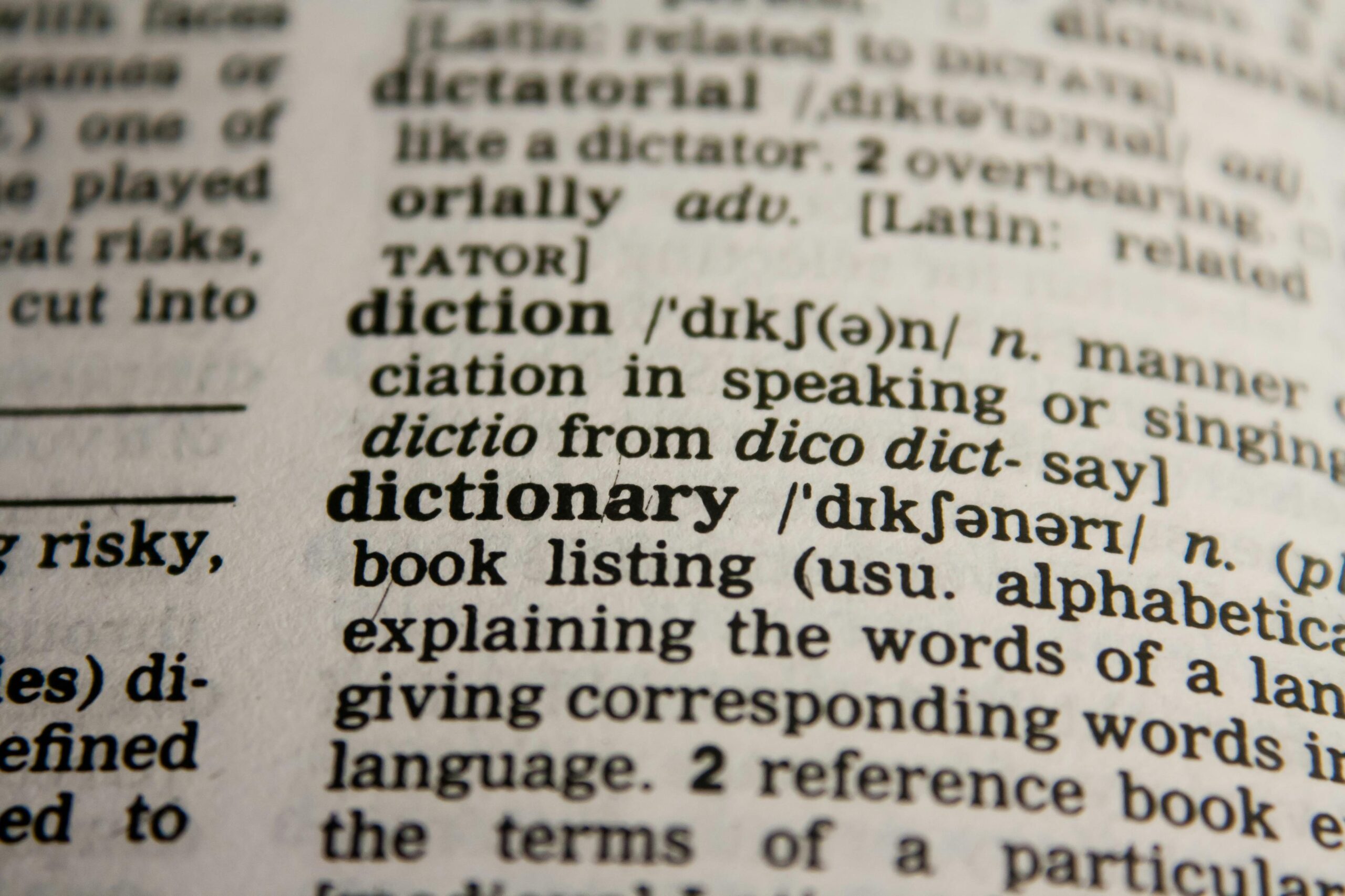
Start by learning the International Phonetic Alphabet (IPA) for your target language. The IPA provides a consistent system for representing sounds, helping you understand exactly what sound you should be producing. Many dictionaries include IPA transcriptions, giving you a reliable pronunciation guide.
Study the place and manner of articulation for difficult sounds. Watch videos or diagrams showing tongue position, lip rounding, and airflow for specific phonemes. This transforms pronunciation from mysterious guesswork into concrete physical actions you can practice and refine.
Record and Compare Your Speech
One of the most effective self-study techniques involves recording yourself speaking and comparing it to native speaker models. This practice helps you hear discrepancies you might not notice during real-time speech. Use your smartphone to record yourself reading passages or having conversations, then listen critically.
Focus on specific features: Are you stressing the right syllables? Is your intonation rising and falling appropriately? Are individual sounds clear and distinct? This self-monitoring develops the critical listening skills necessary for continuous improvement.
Practice Minimal Pairs Extensively
Minimal pairs are words that differ by only one sound, like “ship/sheep,” “bat/pat,” or “thin/tin.” Practicing these pairs trains your ear to distinguish subtle differences and your mouth to produce them consistently. Create flashcards with minimal pairs relevant to your problem sounds and practice them daily.
Don’t just practice in isolation—use minimal pairs in sentences and conversations. This contextual practice helps you maintain correct pronunciation even when focusing on meaning rather than form.
Slow Down and Exaggerate
When learning new sounds or patterns, practice slowly and exaggerate the movements involved. This deliberate practice helps establish the correct motor patterns before you speed up to natural conversation pace. Think of it like learning a musical instrument—you master the notes slowly before playing at tempo.
Exaggeration also helps overcome the interference from your first language. By overemphasizing the new sound initially, you establish it as distinct from similar sounds in your native language.
Master Stress Patterns and Rhythm
For English specifically, learning to stress content words (nouns, main verbs, adjectives, adverbs) while reducing function words (articles, prepositions, auxiliary verbs) creates natural rhythm. Practice this with authentic texts, marking stressed and unstressed syllables.
Try the rubber band technique: hold a rubber band between your hands and stretch it on stressed syllables while keeping it relaxed on unstressed ones. This physical action reinforces the rhythm pattern kinesthetically.
Incorporate Shadowing Techniques
Shadowing involves listening to native speakers and immediately repeating what they say, matching their pronunciation, rhythm, and intonation as closely as possible. Start with short, slow passages and gradually increase difficulty and speed.
This technique is particularly effective because it trains your brain to process sound and meaning simultaneously while producing accurate speech. It mimics natural language acquisition processes and builds automaticity.
🛠️ Tools and Resources for Pronunciation Mastery
Technology-Enhanced Learning
Modern technology offers unprecedented resources for pronunciation improvement. Speech recognition apps can analyze your pronunciation and provide instant feedback on accuracy. These tools use artificial intelligence to identify specific errors and suggest corrections.
YouTube channels dedicated to pronunciation instruction offer visual demonstrations of mouth positions and tongue placements. Slow-motion videos can help you see exactly how native speakers produce challenging sounds.
Working with Language Exchange Partners
Language exchange partners provide authentic conversation practice and real-time feedback. Unlike teachers, exchange partners offer peer-level interaction that can feel less intimidating. Ask your partners to gently correct pronunciation errors and to model correct production for you to imitate.
The key is establishing clear expectations: you want honest feedback on intelligibility, not just polite affirmation. This honest feedback accelerates improvement far more than practice alone.
Professional Coaching and Accent Reduction
For serious pronunciation improvement, working with a speech coach or accent reduction specialist can provide targeted guidance. These professionals can identify your specific error patterns, explain the underlying causes, and design customized exercises to address them.
While this represents a financial investment, the personalized attention typically produces faster results than self-study alone. Even a few sessions can provide insights and techniques you can continue practicing independently.
🎭 Contextual Practice: Moving Beyond Drills
Integrate Pronunciation into Real Communication
While isolated pronunciation practice is valuable, the ultimate goal is clear communication in real contexts. Join conversation clubs, online discussion groups, or community organizations where you’ll use your target language naturally. This authentic practice helps you maintain good pronunciation under the cognitive load of actual communication.
Don’t be afraid to ask people to repeat themselves or to correct you. Most people appreciate the effort you’re making and are happy to help. This vulnerability in learning situations accelerates progress.
Read Aloud Regularly
Reading aloud combines several beneficial practices: it gives you pronunciation practice with authentic texts, helps you internalize stress and rhythm patterns, and builds confidence in producing extended speech. Choose materials slightly below your reading level so you can focus on pronunciation without struggling with vocabulary.
Audiobooks with accompanying texts are ideal for this practice. Listen to a paragraph, then read it aloud yourself, trying to match the narrator’s pronunciation and expression. This combination of listening and producing creates powerful learning.
🚀 Building Long-Term Pronunciation Excellence
Embrace Your Unique Voice
Perfect native-like pronunciation is neither necessary nor always desirable. Your accent is part of your identity and your story. The goal is intelligibility and confidence, not erasing your linguistic heritage. Many successful international communicators maintain recognizable accents while speaking with perfect clarity.
Focus on eliminating errors that impede understanding rather than every trace of an accent. This realistic goal keeps motivation high and acknowledges the legitimate value of linguistic diversity.
Maintain Consistent Practice
Pronunciation improvement requires consistency rather than intensity. Fifteen minutes of focused pronunciation practice daily produces better results than occasional marathon sessions. Build pronunciation exercises into your daily routine—practice during your commute, while exercising, or as part of your morning routine.
Track your progress by recording yourself monthly using the same passage. These recordings provide tangible evidence of improvement, maintaining motivation during the inevitable plateaus in learning.
Stay Patient and Persistent
Changing pronunciation patterns requires rewiring deeply established neural pathways. This takes time and repetition. Celebrate small victories: correctly producing a challenging sound, receiving positive feedback on clarity, or successfully distinguishing minimal pairs. These incremental improvements accumulate into significant competence.
Remember that even native speakers continue refining their pronunciation throughout life as they encounter new contexts and registers. Pronunciation development is a journey, not a destination.
🌟 Transforming Communication Through Better Pronunciation
Mastering pronunciation transforms more than just your speaking ability—it enhances your listening comprehension, increases your confidence, and opens doors to deeper cross-cultural connections. When you can be easily understood and can understand others clearly, conversations flow naturally, ideas are exchanged effectively, and relationships deepen.
The challenges multilingual speakers face with pronunciation are significant but entirely surmountable. By understanding why errors occur, applying targeted strategies, using available tools, and maintaining consistent practice, you can achieve pronunciation that serves your communication goals effectively. Your multilingualism is an asset, and clear pronunciation ensures that asset reaches its full potential in connecting you with speakers around the world.
Start today with one specific pronunciation challenge you face. Apply the techniques outlined here, practice consistently, and watch as your communication clarity improves week by week. The art of pronunciation is within your reach—it simply requires awareness, effort, and the courage to speak up and be heard clearly. 🎤